
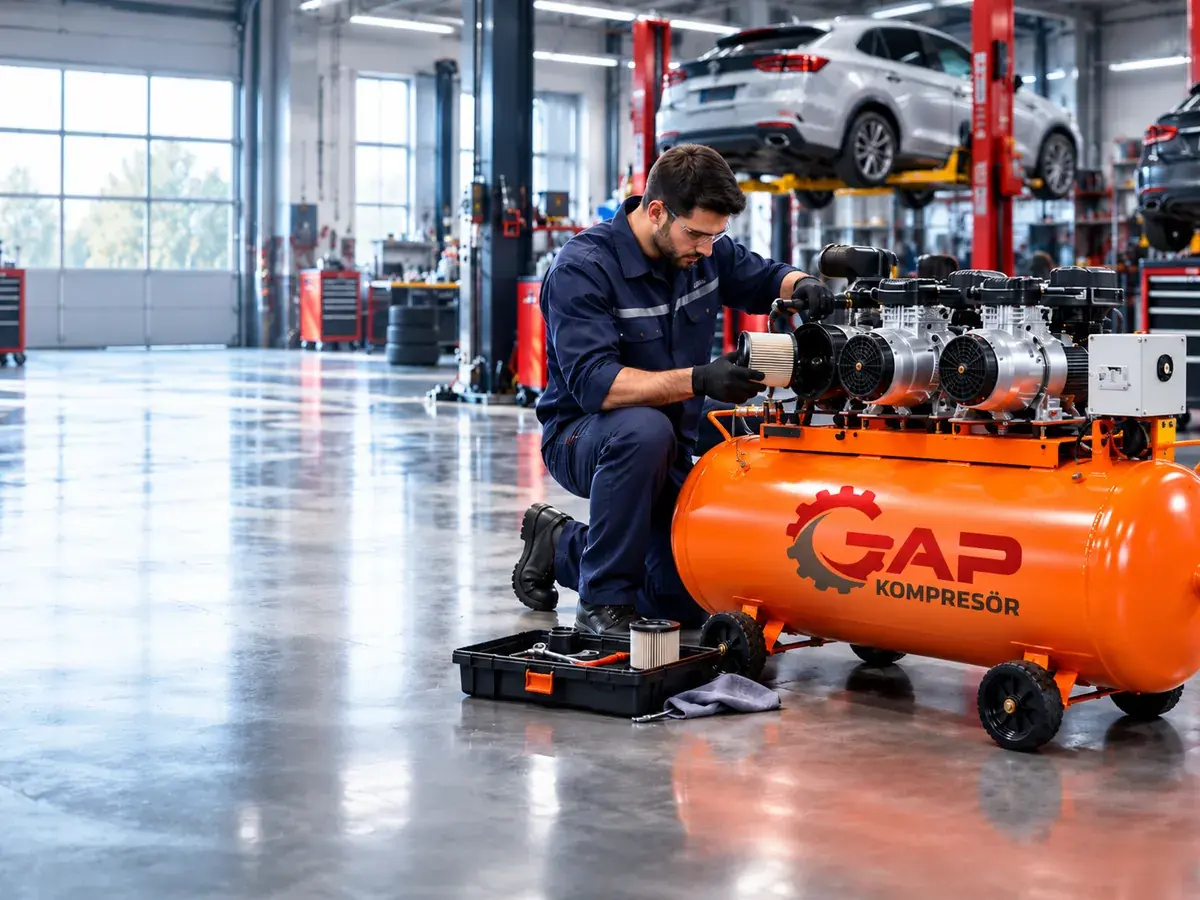
Regular maintenance keeps a compressor efficient and prevents unplanned downtime. The checks below are a general framework; always refer to the unit's manual for exact intervals.
Oil level and oil change
On oil-lubricated compressors, check the oil level regularly and use the oil type recommended by the manufacturer. Change the oil at the interval in the manual, based on running hours and ambient conditions. Intervals can be shorter in dusty or hot environments.
Air and oil filters
When the intake filter clogs, the compressor works harder, output drops and energy use rises. Check the filter regularly and clean or replace it when needed. On rotary screw compressors, the oil filter and separator element should also be replaced at the intervals in the manual.
Draining the tank
Moisture in compressed air collects in the tank. Drain condensate regularly from the valve at the bottom of the tank; on models with automatic drains, check that the system works. Standing water causes corrosion inside the tank and carries moisture into the air line.
Belt and connections
On belt-driven models, check belt tension and wear. A loose belt loses efficiency, while an over-tight one wears the bearings. Look for leaks at air line connections and valves; even small leaks waste a lot of energy over time.
Safety and records
Periodically check that the safety valve works and the pressure gauge reads correctly. Follow the legal periodic inspection requirements for pressure vessels. Recording maintenance with date and running hours helps you catch problems early.
Related products: Piston Air Compressors
Let's choose the right model together
Tell us what you need and we will send the right product and a quote.