
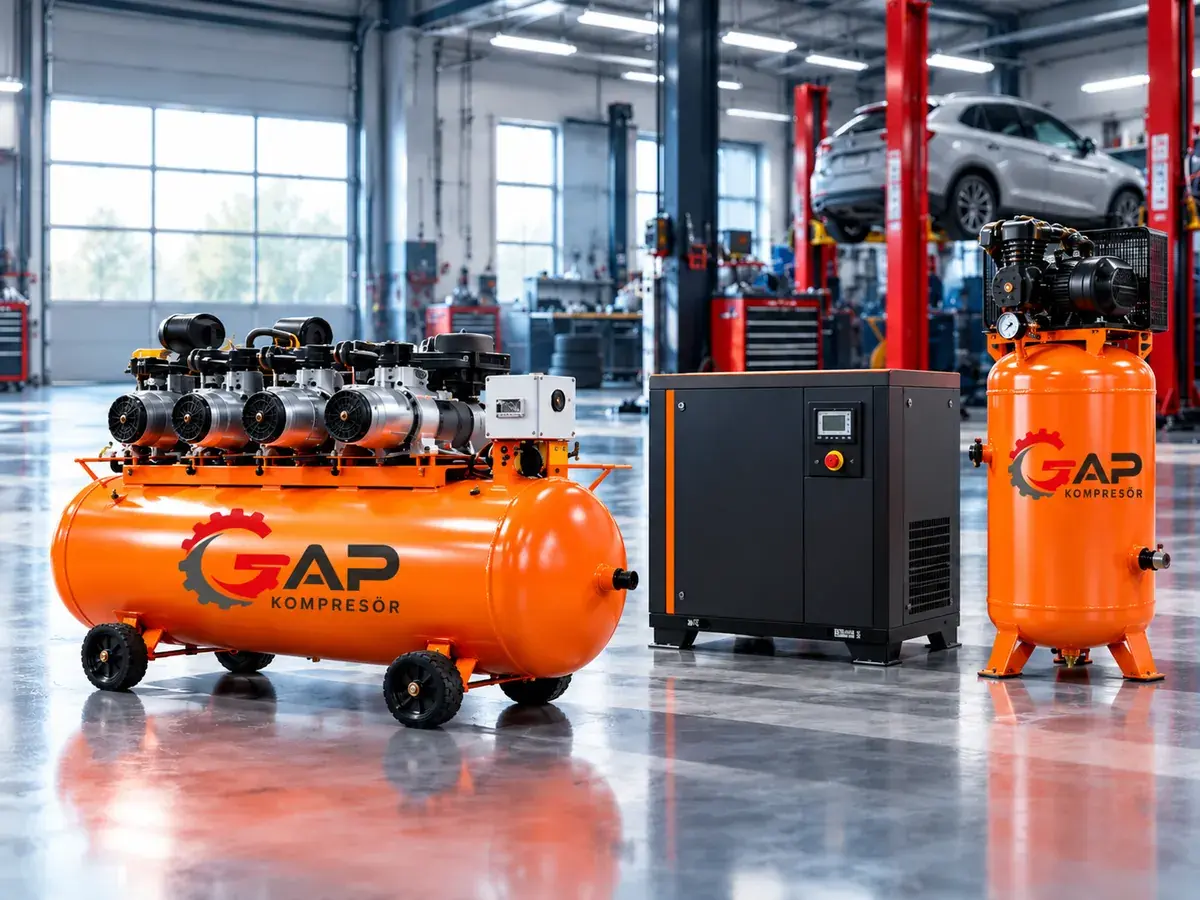
Choosing a compressor starts with correctly estimating the air demand of your equipment. An undersized unit runs under constant load and wears out early, while an oversized one means unnecessary investment and energy cost.
Piston or rotary screw?
Piston compressors suit intermittent use such as workshops, small service shops and light to medium duty. They cost less up front and are relatively simple to maintain, but they are not designed for continuous operation, so their duty cycle is limited.
Rotary screw compressors are built for long, uninterrupted running. They are quieter and deliver a steadier air flow, which makes them the usual choice for shift-based production or high, constant air demand. Inverter models adjust speed to demand and save energy when consumption varies.
How to determine flow rate (l/min)
Flow rate is the amount of air the compressor delivers per unit of time, usually given in l/min or m³/min. Add up the air consumption of all equipment that will run at the same time, then leave roughly 20-30 percent margin for losses and future additions.
Consumption figures are printed on the tool label or in its catalog. Pneumatic tools run intermittently, so consider the simultaneity of use rather than simply adding every tool's full consumption. If you are unsure, send us your equipment list and we will work it out together.
Pressure (bar) and tank volume
Working pressure should be slightly above what your most demanding tool requires. Most workshop applications run at around 8 bar; jobs that need more call for 10 or 13 bar models. Choosing more pressure than needed raises energy consumption.
Tank volume (litres) keeps the compressor from cycling on and off too often and covers sudden peaks in demand. A larger tank reduces motor load, but it does not fix a flow shortfall on its own. A bigger tank only masks insufficient flow; the lasting fix is the right compressor.
Do you need a dryer and filters?
Compressed air contains moisture. Applications that need clean, dry air, such as painting, sensitive pneumatic equipment or food, require a dryer and filters. Where oil-free air is required, look at oil-free compressor models.
Related products: Screw Air Compressors
Let's choose the right model together
Tell us what you need and we will send the right product and a quote.